The email arrives a few times every winter, always slightly panicked. “We just realized our trip lands during Ramadan. Should we move it?” My answer surprises people. No, don’t move it. Morocco during Ramadan is my favorite version of the country. Some of my best nights in Marrakech have happened during the fasting month. The streets empty at sunset, refill an hour later, and stay warm and loud past midnight. The daytime asks a little patience. The evenings pay you back with interest.
Disclosure: Some links in this guide may earn us a commission, at no extra cost to you. It never changes what we recommend.
I’ve timed enough trips to land inside the fasting month that I now plan around the Islamic calendar rather than being surprised by it. This is the Ramadan travel Morocco guide I wish visitors had before they arrived. It covers how Islam shapes the day here, which mosques and religious sites you can enter as a non-Muslim, and how to behave once you’re inside. It also answers the question most people are really asking. What is Morocco during Ramadan actually like on the ground, the good and the awkward both? My broader Moroccan culture guide sets the wider context. This is the deep dive on the religious layer of a trip.
Key Takeaways
- Roughly 99% of Moroccans are Sunni Muslim of the Maliki school. Islam is the state religion, and the king holds the title Commander of the Faithful (Amir al-Mu’minin) (International Center for Law and Religion Studies, 2026; Morocco 2011 Constitution, Article 41, 2026).
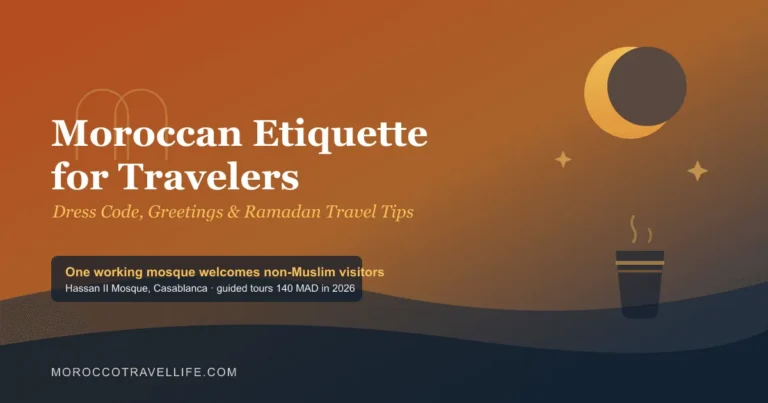
- Non-Muslims generally cannot enter working mosques in Morocco. The grand exception is Casablanca’s Hassan II Mosque, whose official guided tour costs 140 MAD for foreign adults in 2026 (Fondation de la Mosquée Hassan II, 2026).
- Ramadan 2027 is expected to run from roughly February 8 to March 9, with the exact edges set by the moon sighting Morocco’s Ministry of Habous announces. It shifts about 11 days earlier each year, which keeps it in prime travel season through the late 2020s (IslamicFinder, 2026). For reference, Ramadan 2026 ran 18/19 February to 19/20 March.
- In Marrakech in 2027 the daily fast runs from a pre-dawn suhoor ending around 05:58 to ftour (iftar) at about 18:13 on the first day. It stretches to roughly 13 hours by the end of the month as sunset moves later (Aladhan prayer times, 2026).
- Madrasas (Ben Youssef, Bou Inania, Al-Attarine), the restored Tin Mal Mosque, and the Saadian Tombs are all open to non-Muslim visitors. You’ll see plenty of sacred architecture, just mostly not from inside a working prayer hall.
- Visiting Morocco during Ramadan needs no permission and no fasting on your part. Shift your day about two hours later, eat discreetly in daylight, and treat sunset as the evening’s opening act.
Islam in Morocco
What Role Does Islam Play in Moroccan Daily Life?
Think of Islam here less as a set of beliefs you observe from a distance, and more as the clock everyone reads. Roughly 99% of Moroccans are Sunni Muslim of the Maliki school (International Center for Law and Religion Studies, 2026). That legal tradition took root here more than a thousand years ago. It is known for being orthodox in creed but flexible in practice.
Article 3 of the 2011 constitution names Islam “the religion of the State.” Article 41 makes the king Amir al-Mu’minin, Commander of the Faithful (Morocco 2011 Constitution, 2026). He guards the faith, and he also guarantees the free exercise of other beliefs. That dual role explains something you’ll notice on foot. It is why working synagogues and churches sit a short walk from the country’s grandest mosques.
For a traveler, the part you actually feel is rhythm. Five times a day, starting before dawn, the adhan rolls out from every minaret. In a dense medina you’ll hear several mosques answer each other a beat apart. My honest advice: stop bracing against the pre-dawn call, and start hearing it as the city’s soundtrack. Within a week almost everyone does. Fridays carry the week’s heaviest beat. The midday prayer is the big communal one, shops shutter for a couple of hours around it, and families gather afterward over couscous.
None of this asks anything of you as a visitor. Nobody expects non-Muslims to pray, fast, or perform piety. Alcohol is legal in licensed venues, and city dress is relaxed. Respect that’s noticed is returned warmly, while imitation isn’t wanted. The genuinely useful move is simply to read the rhythm: a lull at Friday midday, a pause five times daily, and a wholesale reorganization of the calendar once a year.
Can Non-Muslims Visit Mosques in Morocco?
Generally no. Knowing that before you arrive saves a very common disappointment. Working mosques in Morocco are closed to non-Muslims, a policy dating to the French protectorate era and kept in place since. You’ll admire the Koutoubia in Marrakech or the Qarawiyyin in Fes from the outside. Their doorways alone are worth the detour, but you won’t step into the prayer hall.
Here’s the reframe I give every visitor who’s disappointed by that rule. Morocco hands you an enormous amount of sacred architecture you can walk straight into, so the mosque closure barely dents the trip. The country’s historic madrasas are open to everyone. These are former Quranic colleges built around courtyards of carved cedar, stucco, and zellige tile, and they’re often more beautiful up close than the mosques beside them. Ben Youssef Madrasa in Marrakech, plus Bou Inania and Al-Attarine in Fes, are the three most worth your time. My Fes travel guide covers the last two, in the world’s largest car-free medina.
The one working-mosque exception is grand enough to anchor a Casablanca stop. The Hassan II Mosque is among the largest on earth, with its minaret rising straight over the Atlantic. It welcomes non-Muslim visitors on official guided tours outside prayer times. In 2026 the official tariff is 140 MAD for foreign adults and 70 MAD for residents and foreign students. Children six and over and Moroccan students pay 30 MAD, and under-sixes go free (Fondation de la Mosquée Hassan II, 2026). The tour runs roughly 45 minutes to an hour. Slots open every morning plus one afternoon session, with reduced Friday hours and a shortened Ramadan schedule. Check the season before you go.
Two more sites round out the list of religious places non-Muslims can enter freely. The restored Almohad-era Tin Mal Mosque in the High Atlas is no longer an active congregational mosque, and it can be visited. The Saadian Tombs in Marrakech, a royal necropolis of extraordinary tilework, are open to all. Here’s the quick reference I keep in my head:
| Religious site | Can non-Muslims enter? |
|---|---|
| Working mosques (Koutoubia, Qarawiyyin, etc.) | No, view from the doorway |
| Hassan II Mosque, Casablanca | Yes, guided tour (140 MAD foreign adult) |
| Tin Mal Mosque, High Atlas (restored) | Yes |
| Madrasas (Ben Youssef, Bou Inania, Al-Attarine) | Yes, former Quranic colleges |
| Saadian Tombs, Marrakech | Yes |
| Synagogues & churches (many still active) | Yes, generally welcoming |
What’s the Etiquette at Moroccan Religious Sites?
Modest, quiet, and shoes-aware covers most of it. For the Hassan II Mosque tour the dress rule is firm: shoulders, torso, and knees covered. Shorts and sleeveless tops are refused at the door. Headscarves are not required for women on the tour. You’ll take your shoes off before entering, and carry them in a bag handed to you at the entrance (Fondation de la Mosquée Hassan II, 2026).
The same instincts carry over to madrasas, tombs, and synagogues, even where the rules are looser. Keep your voice down. Dress a notch more covered than you would for the souk. Read the room on photography: courtyards and architecture are fair game, but people at prayer or quiet reflection are not. At an active synagogue, men may be asked to cover their heads, and Saturday can mean closure or restrictions. When a caretaker shows you around a smaller site, a small tip of 10 to 20 MAD is the courteous close. The broader picture of photography, dress, and greetings across a whole trip sits in my Moroccan etiquette guide, which this post pairs with.
What Is It Like to Travel Morocco During Ramadan?
Most advice about Morocco during Ramadan splits into two camps: avoid the month entirely, or you’ll love it. Neither is much help to someone with flights already booked. Here’s the fuller answer, and what Morocco during Ramadan actually asks of a visitor.
Ramadan is the ninth month of the Islamic lunar calendar, when Muslims fast from dawn to sunset. No food, water, or cigarettes pass during daylight. The lunar year is shorter than the solar one, so the month slides about 11 days earlier each year. Ramadan 2027 is expected to run from roughly February 8 to March 9, with Eid al-Fitr around March 10 (IslamicFinder, 2026). I say “expected” deliberately. Morocco sets the start by local moon sighting, announced by the Ministry of Habous and Islamic Affairs, so the edges can move a day either way. Ramadan 2026, for comparison, ran 18/19 February to 19/20 March.
The single most useful thing to understand is the shape of the fasting day. The pre-dawn meal, suhoor, has to finish before the Fajr call. The fast breaks at sunset with ftour, the Moroccan word for iftar. Tradition opens it with dates and a bowl of harira, the hearty tomato-lentil-chickpea soup that defines the month. In Marrakech in 2027 that window runs from about 05:58 to 18:13 on the first day. By the last day it stretches to roughly 13 hours, opening at 05:30 and closing at 18:35, as late winter turns toward spring (Aladhan prayer times, 2026).
How a Day in Morocco During Ramadan Unfolds
That fasting clock reorganizes the visible day. Once you know the pattern, none of it catches you off guard. Mornings run slow and quiet. Midday holds a muted version of normal life. The strangest and most magical hour is the one just before sunset. Shops close early, taxis vanish as drivers race home, and the streets fall briefly, almost eerily silent while families gather at the table.
Then the ftour cannon or the Maghrib call sounds, and the city eats as one. About an hour later everything switches back on, brighter and busier than a normal night. Cafés fill, pastry stalls glow, and the medina stays alive until one or two in the morning. In the small hours, in some neighborhoods, you’ll still hear the nafar, a drummer or horn player who walks the streets to wake people for suhoor.
That inversion is hard to picture from a normal travel schedule. So I mapped the rough shape of street life on an ordinary day against a day in Morocco during Ramadan. It is based on what I have watched from the same Marrakech riad terrace on repeat visits. The pre-sunset trough and the post-ftour surge are the two features no non-Ramadan day comes close to reproducing.
What Are the Pros and Cons of Visiting During Ramadan?
Both are real, and weighing them honestly beats the usual reflex. Start with the upside of Morocco during Ramadan. The atmosphere is unmatched. Ftour invitations from near-strangers happen, and they’re the warmest thing that can happen on a trip here. Major sights are quieter by day, and the nightly street life is genuinely special.
Now the downside. Some restaurants close for the month, or open only after sunset. Daytime opening hours compress. A few tours and activities pause or run reduced schedules. And service staff working a full fast can be understandably low-energy in the final hour before sunset, which is exactly the wrong moment to start haggling over a rug.
| Ramadan travel: the honest ledger | |
|---|---|
| Pros | Cons |
| Ftour invitations and a warm, communal mood | Some restaurants close or open only after sunset |
| Quieter major sights and monuments by day | Compressed, unpredictable daytime opening hours |
| The best night atmosphere of the year | Some tours and activities paused or reduced |
| Lower shoulder-season crowds overall | Tired staff and short tempers in the last hour before ftour |
| Harira, chebakia, and ftour food culture at its peak | You’ll adjust your own schedule to match the city’s |
I’ve traveled here with enough friends during Ramadan to spot the pattern. The trips to Morocco during Ramadan that go well share one habit: they shift the whole day two hours later. Those friends sleep in, sightsee in the calm late morning, rest through the flat mid-afternoon, and treat sunset as the evening’s opening act rather than its end. The friends who fight the rhythm leave grumbling. They’re the ones hunting for lunch at 1 p.m. in a small town where every café is shut, or shopping during the pre-ftour hush. The city isn’t broken during Ramadan. It’s running on a different clock, and the trip works the moment you set your watch to it.
What Are the Practical Tips for a Ramadan Trip?
A handful of habits cover almost everything you need for Morocco during Ramadan. Eat and drink discreetly by day. No law requires non-Muslims to fast, and tourist-zone cafés and riad kitchens keep serving you. But snacking while walking a daylight street is the small rudeness to avoid, so step inside or out of view.
Carry water and a few snacks for long transit days, since roadside stops may be shut. Plan sightseeing for mornings, when monuments are quiet and everyone still has energy. Book an ftour experience or two. Many riads and restaurants run beautiful sunset meals, and sharing that first bowl of harira is the trip’s emotional high point. For what those dishes actually are, my Moroccan food guide walks through harira, chebakia, and the rest of the ftour table.
Two more logistics are worth flagging. Transport still runs, but intercity buses and trains shift schedules and fill up around ftour. They’re busiest around Eid al-Fitr, the holiday that closes the month, when much of the country travels home. Book ahead, and avoid moving cities on Eid itself. Expect alcohol sales to pause in many shops and supermarket sections for the month too. If your dates also brush a religious festival or moussem, my Morocco festival calendar covers the sacred-music and pilgrimage events worth building around.
Should You Avoid Ramadan Altogether?
Only if your trip is built around something Ramadan genuinely dampens. That means a wine-and-dining tour, a packed nine-to-five sightseeing sprint, or a first visit where you want maximum daytime bustle and minimum adjustment. For most travelers, and especially repeat visitors, I’d argue the opposite. Morocco during Ramadan is one of the most rewarding windows to see the country, precisely because it shows you a rhythm the other eleven months can’t. If you’d rather sidestep it, my Best Time to Visit Morocco guide lays out the month-by-month trade-offs. My roundup of the best things to do in Morocco flags which experiences run normally year-round, and which lean on daytime dining.
Frequently Asked Questions
Can tourists visit Morocco during Ramadan?
Yes, absolutely. Hotels, riads, tourist-zone cafés, monuments, and transport all keep operating, and no law requires non-Muslim visitors to fast. The main adjustments are practical. Some restaurants close or open only after sunset, daytime hours compress, and the courteous move is to eat and drink out of public view during daylight. In return you get quieter sights by day, and the best night atmosphere of the year after ftour.
Can non-Muslims go inside mosques in Morocco?
Generally no, because working mosques are closed to non-Muslims. The major exception is Casablanca’s Hassan II Mosque, which runs official guided tours at 140 MAD for foreign adults in 2026. The restored Tin Mal Mosque in the High Atlas is also open. You can freely enter madrasas like Ben Youssef, Bou Inania, and Al-Attarine, plus the Saadian Tombs and most synagogues and churches.
What time is iftar (ftour) in Morocco during Ramadan?
Ftour falls at sunset, which shifts through the month. In Marrakech in 2027 it falls around 18:13 at the start of the month, and near 18:35 by the end, as late winter turns toward spring. Tradition breaks the fast with dates and harira soup. It’s the moment the entire country sits down to eat at once, so streets go quiet just before, then come alive about an hour after.
Is it rude to eat in public during Ramadan as a tourist?
There’s nothing illegal about eating in public in Morocco during Ramadan. Cafés in tourist areas keep serving through the day, and non-Muslims aren’t expected to fast. The courtesy is discretion: eat and drink inside a venue, or out of view, rather than snacking on a busy daylight street. After sunset the discretion disappears entirely, and you’re warmly encouraged to join the celebration.
When is Ramadan in Morocco in 2027?
Ramadan 2027 is expected to run from roughly February 8 to March 9, with Eid al-Fitr around March 10. Morocco fixes the exact start by local moon sighting, announced by the Ministry of Habous and Islamic Affairs, so the edges can move a day either way. Because the Islamic calendar is lunar, the month moves about 11 days earlier each year. That keeps Morocco during Ramadan inside the country’s prime travel season through the late 2020s.
What is harira and why is it everywhere during Ramadan?
Harira is a rich tomato-based soup with lentils, chickpeas, herbs, and often a little meat, thickened with flour or egg. It’s the traditional dish for breaking the fast, because it’s nourishing and gentle on an empty stomach. During Ramadan it appears on nearly every ftour table and menu across the country, usually served alongside dates and sweet chebakia pastries.
Putting It Together
Islam sets the rhythm of a Morocco trip whether you plan around it or not. You feel it in the five daily calls, the Friday pause, the closed mosque doors that open onto madrasas and tombs instead, and above all in Morocco during Ramadan. None of it demands anything of you beyond attention and a little courtesy. Dress modestly at religious sites, ask before you photograph, eat discreetly by day during the fasting month, and say yes to any ftour invitation you’re lucky enough to get.
If your dates land in Ramadan, don’t move them on reflex. Shift your day two hours later, book a sunset meal, and let the country show you its warmest nights. The wider reasons behind all of this, the hospitality and the layered identity and the tea, live in my complete Moroccan culture guide. The day-to-day manners that make every interaction smoother are in the companion Moroccan etiquette guide.